
November is Mouth Cancer Action Month. Throughout the month the Kenya Dental Association joins the global oral health community in asking Kenyans to do one simple thing: look inside your own mouth, and get anything unusual checked.
Mouth cancer is one of the cancers where the difference between an early visit and a late one is measured in lives. It is also one of the few cancers that can be seen and felt without any special equipment — by the person themselves, and by any dentist during a routine appointment.
What is mouth cancer?
Mouth cancer, also known as oral cancer, is a cancer that develops in the tissues of the mouth. It can affect the tongue, lips, gums, inner cheeks, floor of the mouth and other oral tissues. It occurs when abnormal cells grow uncontrollably, and it may spread to other parts of the body if it is not detected early.
Common signs and symptoms
- Mouth ulcers that do not heal within two weeks.
- White or red patches inside the mouth.
- Unexplained lumps or swellings in the mouth or neck.
- Persistent pain in the mouth or tongue.
- Difficulty chewing, swallowing or speaking.
- Unexplained bleeding in the mouth.
- Persistent numbness of the tongue or lips.
- Difficulty moving the tongue or jaw.
- Unexplained loosening of teeth.
- Persistent hoarseness or a sore throat.
These symptoms do not automatically mean cancer, but they do require professional assessment.
What causes mouth cancer?
The major risk factors are tobacco use in all its forms — cigarettes, cigars and smokeless tobacco — excessive alcohol consumption, Human Papillomavirus (HPV) and particularly HPV-16, prolonged exposure of the lips to ultraviolet sunlight, increasing age, poor nutrition and diets low in fruits and vegetables, and a previous history of oral cancer.
How can mouth cancer be prevented?
- Avoid tobacco in all its forms.
- Limit or avoid alcohol consumption.
- Maintain a healthy, balanced diet.
- Practise good oral hygiene.
- Protect your lips from excessive sunlight.
- Consider HPV vaccination in line with national recommendations.
- Attend regular dental examinations.
- Seek professional assessment of any suspicious lesion.
Why early detection matters
Early detection significantly improves treatment outcomes and survival prospects. A dentist can perform an oral cancer screening simply by examining the lips, tongue, gums, cheeks and other oral tissues — it takes minutes, and it is part of a normal dental visit. Where treatment is needed it may involve surgery, radiotherapy, chemotherapy, targeted therapy or immunotherapy in selected cases, and rehabilitation and supportive dental care.
If you notice something suspicious
Do not ignore it, and do not attempt to treat it with home remedies. Seek assessment from a qualified dentist, an oral and maxillofacial surgeon or a medical specialist. A biopsy may be needed.
You can find a KDA member practice near you through the association’s Find a Dentist directory.
Share the message
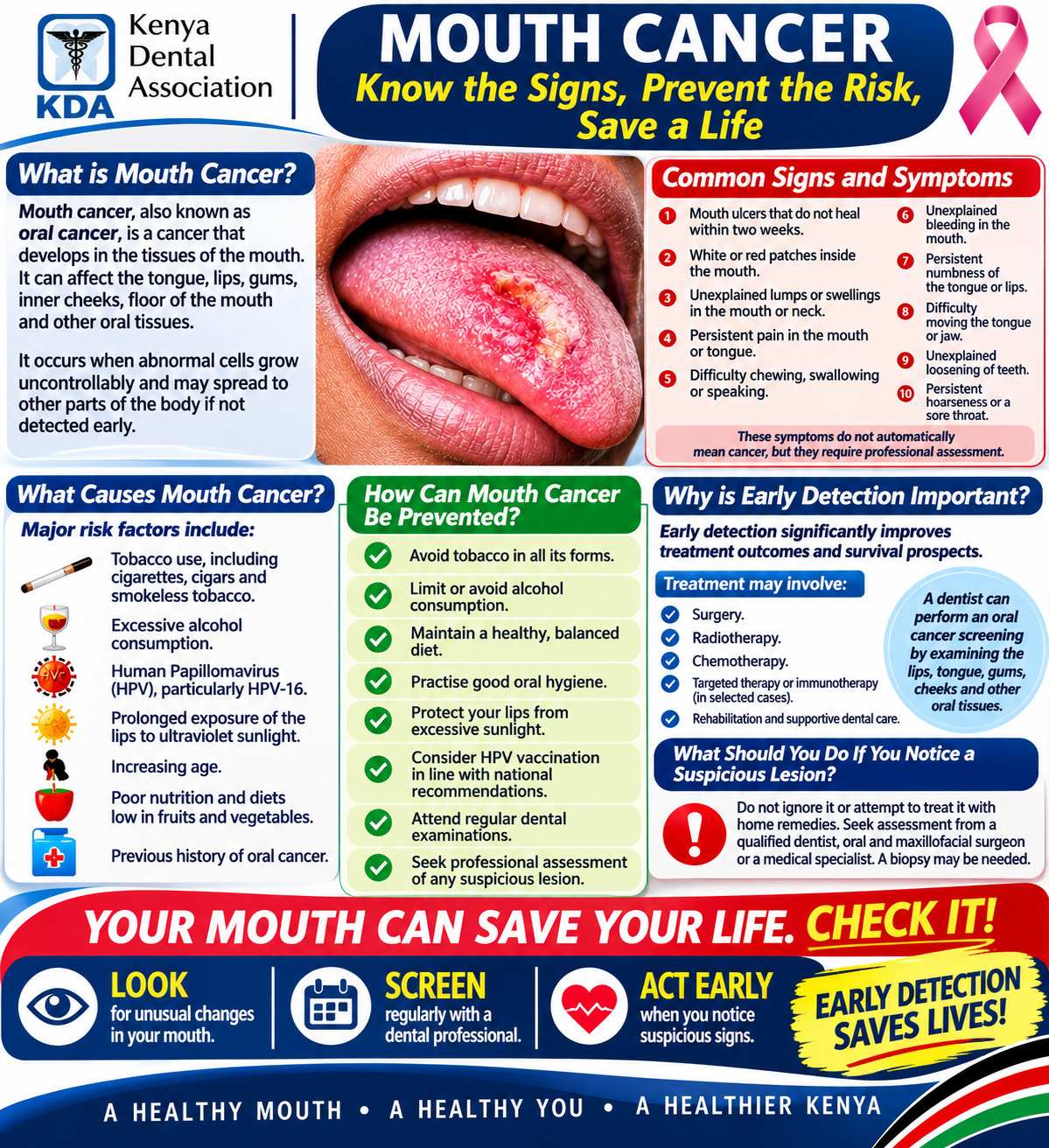
Members, branches and practices are encouraged to display and share the KDA awareness poster below through the month of November. A print-quality PDF is available for clinic notice boards and community outreach.
Download: KDA Mouth Cancer Awareness Poster (PDF)
Your mouth can save your life. Check it. Look for unusual changes in your mouth. Screen regularly with a dental professional. Act early when you notice suspicious signs.
Remove the doubt, get checked out. #MouthCancerAction
A healthy mouth • A healthy you • A healthier Kenya