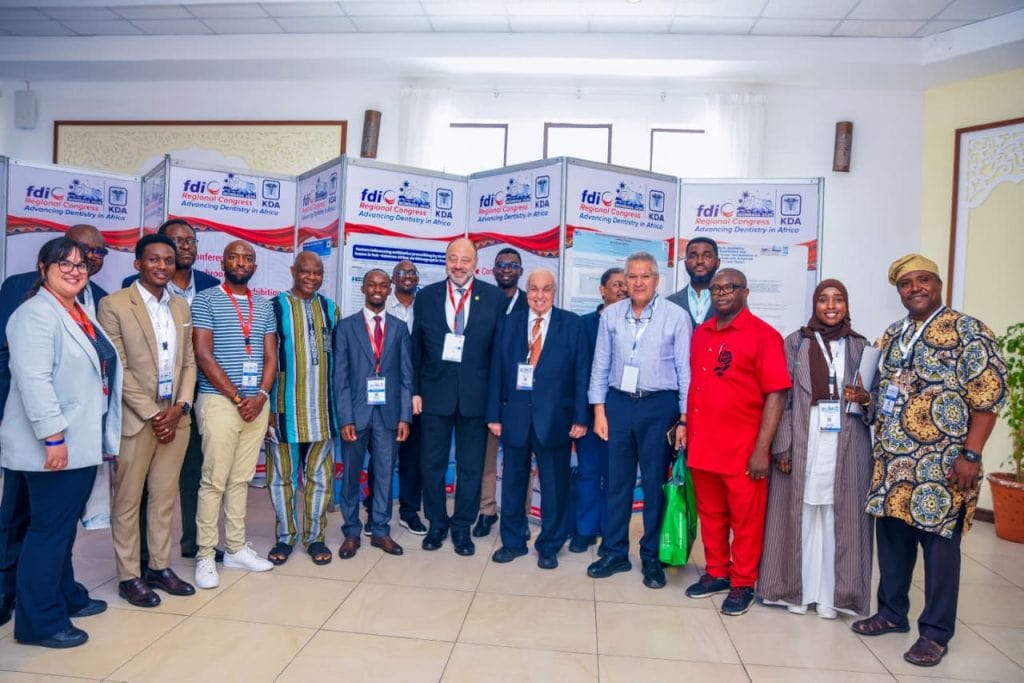
From 21 to 23 October 2026, the PrideInn Paradise Beach Resort in Mombasa hosted the FDI Regional Congress alongside the 43rd Kenya Dental Association Annual Scientific Conference and Exhibition. Held under the theme “Advancing Dentistry in Africa,” the gathering brought together dental professionals, educators, industry participants and oral health advocates from Kenya and 24 other countries for three days of scientific learning, practical training and professional exchange.
The congress in numbers
- 462 unique delegates recorded over three days
- 24 countries represented besides Kenya
- 12 African countries among them
- 2,113 congress CPD codes issued across the sessions
- 76 hands-on workshop certificates and codes
A congress with measurable reach
The KDA Secretariat recorded 462 unique delegates across the three days: 444 on Wednesday, 431 on Thursday and 364 on Friday. A total of 344 delegates attended all three days, roughly 77 per cent of the first day’s attendance — a sign that engagement carried beyond the opening ceremony into the scientific programme and the closing sessions.
The international attendance report recorded 58 attendees from 24 countries outside Kenya by its reporting cut-off. African countries represented included Nigeria, Uganda, Tanzania, Somalia, Ghana, South Africa, Egypt, Zambia, Cameroon, Ethiopia, Rwanda and Seychelles. Participants from Europe, Asia and the Americas widened the range of professional experience in the room.
Science at the heart of the gathering
The scientific programme covered restorative dentistry, endodontics, oral surgery, implants, prosthodontics, paedodontics, periodontics and public health, connecting day-to-day clinical practice with emerging techniques and the wider responsibility of improving oral health.
Attendance records show strong engagement across the clinical disciplines. Restorative dentistry drew 239 unique attendees on Day 1 and 184 at the Day 2 session. Prosthodontics attracted 157, while the Day 3 oral surgery and implants session recorded 150.
Hands-on workshops covered practical tooth bleaching, digital dental photography, prosthetically driven implant rehabilitation, an ortho-restorative workflow and laser technology. Secretariat records allocated 25 certificates for tooth bleaching, 15 for implant rehabilitation, 16 for the ortho-restorative workflow and 20 for laser technology.

Continuing professional development
The Secretariat issued 2,113 congress CPD codes over the three days, alongside 76 hands-on workshop certificates and codes. Day-specific records showed CPD activity for 415 delegates on Day 1, 426 on Day 2 and 431 on Day 3 — delegates commonly claimed across more than one session per day, which is why the code total runs well ahead of the headcount.
Continuing professional development helps practitioners keep pace with evolving techniques, materials, technology and patient needs. The lasting value of the congress will be measured in how those lessons are applied in clinics, hospitals, teaching institutions and public health programmes.
Building bridges across Africa and the world
International participation matters especially to a congress about advancing dentistry in Africa. Delegates from neighbouring countries — Uganda, Tanzania, Somalia and Rwanda among them — joined colleagues from Nigeria, Ghana, South Africa, Zambia and other African nations, together with participants representing universities, clinical practices and international professional networks beyond the continent.
Such engagement supports shared learning on dental education, clinical standards, oral disease prevention, regulation and access to care. International collaboration is at its most valuable when it supports locally relevant solutions and enables African professionals to bring their own evidence, innovations and experience into global discussions.
Exhibition, innovation and the future of practice
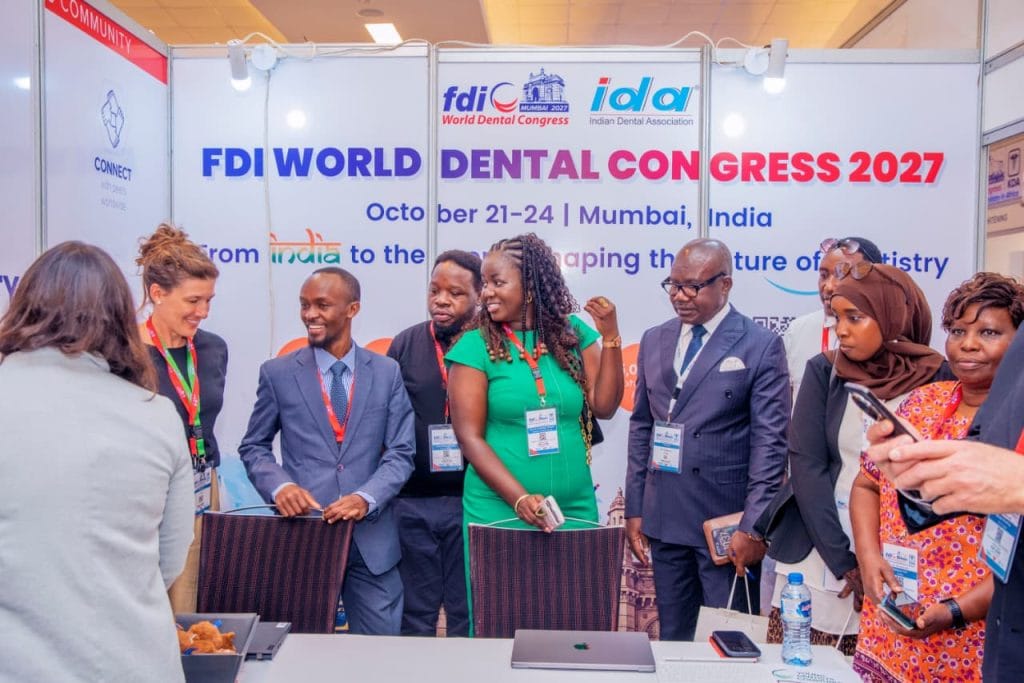
The conference and exhibition format connected practitioners directly with the dental industry. Materials, equipment, technologies and professional services are central to modern care, and face-to-face interaction between clinicians and industry helps professionals judge what is genuinely useful in their own practice.
Innovation still has to be grounded in training, evidence, patient safety and responsible procurement. Technology earns its place when it improves care and delivers a real benefit to patients.
Mombasa as the host city
Mombasa gave the congress a coastal setting for both scientific engagement and professional networking. The social programme included a welcome cocktail and a gala dinner, creating room for delegates to meet well beyond the lecture halls.
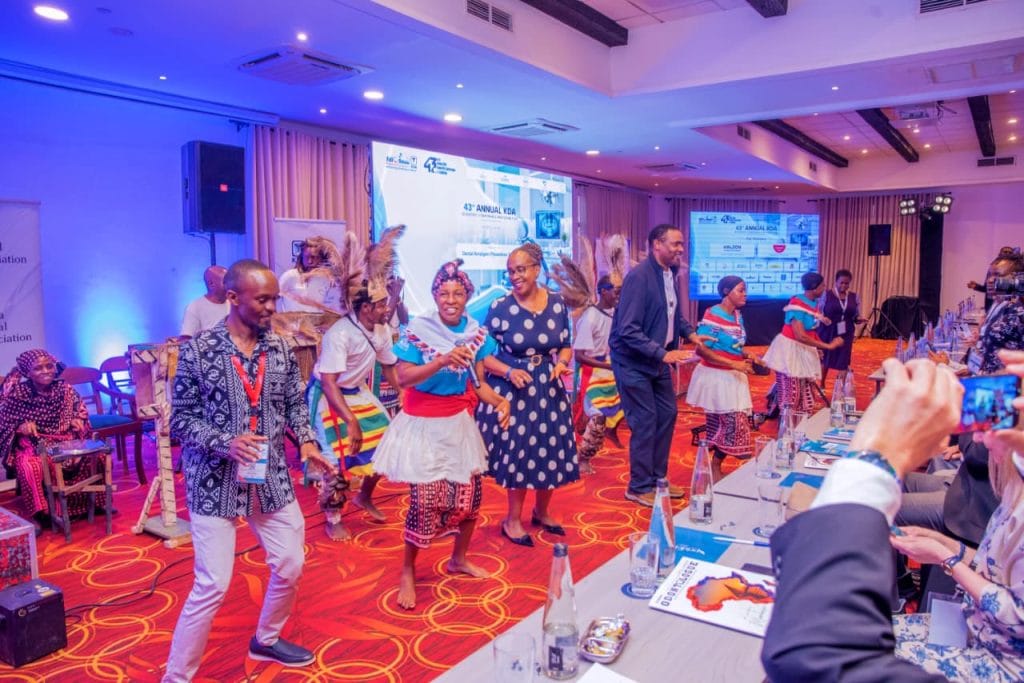
Delegates who responded to the post-congress survey highlighted the entertainment and music, the food and drinks, and the networking as the features they most appreciated. They also offered practical suggestions for next time: moving the gala dinner from beach sand onto a hard surface, making social events more affordable for students and younger delegates, refreshing the networking format and tightening programme logistics. That feedback is a useful reminder that a congress is judged on both its scientific content and the comfort, accessibility and value experienced by the people attending it.
The role of the Kenya Dental Association
The KDA Annual Scientific Conference provided an important national platform within the wider FDI regional gathering. Professional associations sustain continuing education, professional standards, scientific exchange and advocacy for better oral healthcare, and they connect practitioners to the policy and institutional questions that shape the profession.
Holding the two meetings together created an opportunity to place Kenyan priorities inside regional and global conversations: preventive oral healthcare, public awareness, support for young professionals, evidence-based practice, and collaboration among practitioners, educators, regulators, policymakers and industry.
From a successful meeting to a lasting African legacy
The theme “Advancing Dentistry in Africa” asks that scientific knowledge, professional cooperation and innovation lead to measurable improvements in oral health. The attendance, international participation, scientific programme and CPD activity demonstrate the congress’s reach. The next test is whether that momentum becomes sustained collaboration and practical improvement.
- Sustain regional collaboration: develop lasting links between African dental associations, universities and clinical institutions.
- Invest in young professionals: expand student participation, mentorship, practical training and affordable access to scientific meetings.
- Translate research into practice: encourage evidence-based care, responsible technology adoption and continuing professional development.
- Strengthen prevention: promote oral health education and preventive services as integral parts of primary healthcare.
- Measure long-term impact: track the partnerships, educational outcomes and initiatives that arise from the congress.
- Improve future congresses: use delegate feedback to strengthen accessibility, programme management, value for money and participant experience.
Mombasa provided the meeting place. The theme provided the direction. The lasting achievement will be determined by the collective commitment of the dental community to turn the ideas and relationships generated into action.
Conclusion
The FDI Regional Congress and the 43rd KDA Annual Scientific Conference and Exhibition brought an international dental community to Kenya’s coast at a moment when scientific collaboration, continuing education and improved access to oral healthcare remain pressing priorities. The participation of 462 unique delegates, representation spanning 24 countries beyond Kenya and the issuing of more than 2,100 congress CPD codes show the scale of professional engagement achieved.
The most important measure of success will be what follows: stronger regional networks, knowledge shared across borders, better-prepared practitioners, and initiatives that help more people access safe and effective dental care. Advancing dentistry in Africa is a shared undertaking, and Mombasa was an important opportunity to move it forward.
This report draws on the KDA Secretariat’s “Delegate Attendance · Days 1, 2 and 3” report, closed on 23 October 2026, and “International attendance by nation,” prepared for the Organising Committee on 22 October 2026. International figures reflect attendees recorded by the reporting cut-off and exclude Kenya. Social programme comments are drawn from an anonymous post-congress survey. No speeches, resolutions, financial outcomes or commitments have been attributed to the congress beyond these records.